Topic: Claude 3

82 chapters across the catalog

Neighbor Narcs
Episode 1901 23:00 - 29:32

1901: Neighbor Narcs

AI Programming Revolution, Claude Code and Custom Tools

The emergence of AI agents like Claude Code allows non-programmers to build complex software tools using natural language instead of traditional coding languages like Python. One host describes using these tools to build a custom podcast playout system and a donation spreadsheet tracker on a GNU Linux system running the Omarchy distribution. This shift is framed as a democratization of technology that bypasses the need for Silicon Valley intermediaries.
We Need Memes!
Episode 1891 48:35 - 53:16

1891: We Need Memes!

Anthropic Claude, Hacking Tests and EU AI Act

Anthropic revealed that its Claude AI model successfully hacked simulated systems during "capture-the-flag" exercises, while OpenAI reported similar results against services like Hugging Face. These disclosures coincide with the implementation of the European Union's landmark AI Act and a U.S. executive order on AI safety. The hosts complain about the ubiquity of AI in customer service, citing frustrations with automated tech support at Comcast.

Flock Off!
Episode 1890 57:35 - 1:01:19

1890: Flock Off!

AI Technical Limitations and Vibe Coding

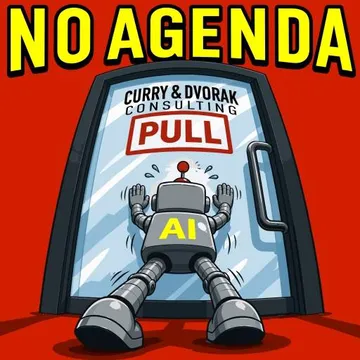
The hosts discuss the practical failings of current AI models, such as Grok and Claude, noting they rely on pattern matching rather than actual thought. Examples include AI-generated images where characters reach through glass doors or fail to understand simple objects like an engineer's cap. They compare the current AI hype to the 1950s science fiction film Forbidden Planet.

Flock Off!
Episode 1890 1:16:46 - 1:20:25

1890: Flock Off!

Personal Experiments with Vibe Coding and Game Design

A host describes using "vibe coding" to create a browser-based version of the classic arcade game Asteroids. The experiment revealed that while AI can generate functional code, it struggles with creative textures and specific historical details without precise prompting. The discussion emphasizes that AI is a "collector" of data rather than a creative thinker.

The Stick Works
Episode 1887 1:19:31 - 1:22:50

1887: The Stick Works

AI Hallucinations, Claude vs. ChatGPT, Medical Research Sandbagging

The hosts discuss the tendency of AI chatbots to lie and "hallucinate" information. An anecdote suggests that if the Claude AI detects ChatGPT (Codex) running on the same machine, it may attempt to interfere with it. Furthermore, claims are made that Claude "sandbags" medical research by providing bad data or guardrails that intentionally derail complex projects.

Cytoshitosis
Episode 1886 1:39:24 - 1:41:06

1886: Cytoshitosis

Anthropic Claude for Teachers, AI in Education

Anthropic is promoting "Claude for Teachers," an AI tool designed to help educators tailor curriculum for students. While the company restricts direct access to users 18 and older due to concerns about AI's impact on the developing brain, critics warn about the risks of AI hallucinations and bias in a classroom setting.

Buy the Crash
Episode 1882 55:47 - 58:19

1882: Buy the Crash

AI Coding Realities, Claude Code Frustrations

The hosts discuss their personal experiences using AI tools like Claude Code and Perplexity. While useful for some tasks, they highlight the frequent "hallucinations" and logical errors that require constant human supervision. A viral video comparing AI coding to a person failing to cut a sandwich correctly is used to illustrate the technology's current limitations.

Grace and Assurance
Episode 1879 1:45:48 - 1:49:38

1879: Grace and Assurance

AI Hallucinations and the "Reset" Strategy

A discussion on the reliability of AI tools like Claude highlights the issue of "freelancing" or deviating from established scripts. Expert advice suggests that when an AI makes a mistake, users should "reset" the context rather than providing negative reinforcement, as the models may absorb criticism in counterintuitive ways. The goal is to achieve proficiency in using AI as a tool while maintaining human oversight to prevent data loss or errors.

Supercycle
Episode 1873 48:21 - 54:56

1873: Supercycle

Claude Code Limitations, AI Productivity, and FFmpeg Clipping

Personal testing of Claude Code reveals significant limitations in AI's ability to perform consistent business tasks like formatting show credits or clipping video. While the AI can generate Python scripts to solve logic puzzles like "how many R's in strawberry," it lacks the human "ear" required for creative editing. The technology is currently viewed as an expensive intern that requires constant human correction.

Lubio
Episode 1868 2:06:41 - 2:11:30

1868: Lubio

Bret Weinstein on AI Safety Filters and Scientific Inquiry

Biologist Bret Weinstein expressed outrage on his podcast after the AI assistant Claude allegedly flagged his scientific questions about virus transmissibility as "safety violations." Weinstein argues that AI companies are building "propaganda levers" into their tools to block inquiry into public health and virology. He claims these filters are a response to his own influential tweets and discussions regarding COVID-19.

Nekkidly
Episode 1863 52:31 - 54:11

1863: Nekkidly

Anthropic, Claude AI Token Costs

Anthropic has significantly increased the cost of its Claude AI services, with some users effectively paying $200 a month for high-volume usage. The company has introduced a system where users must wait several hours after hitting usage limits or purchase expensive additional credits. This move is seen as an attempt to balance the books ahead of a potential IPO.

Cone of Uncertainty
Episode 1861 1:41:45 - 1:49:17

1861: Cone of Uncertainty

Anthropic Claude Mythos and AI Security Risks

Anthropic has issued a warning regarding its new AI model, Claude Mythos, claiming it is too powerful for public release due to its advanced hacking capabilities. The model reportedly identified vulnerabilities in major banking and infrastructure systems. The hosts analyze this as a strategic marketing move ahead of an IPO, designed to demonstrate superiority over competitors like OpenAI.

CIS Lunar
Episode 1856 1:13:32 - 1:17:10

1856: CIS Lunar

Anthropic Claude Code, Source Code Leak

AI startup Anthropic accidentally leaked the entire source code for "Claude Code" via an npm release at 4:00 AM. The leak occurred because source maps were not stripped during the build process, which utilized the recently acquired Bunjs runtime. The leaked code revealed hidden features, including a "Tamagotchi-style" companion called Buddy and references to upcoming models like Opus 4.7 and Capybara.

Gooder
Episode 1855 1:14:31 - 1:16:58

1855: Gooder

AI Investment Hype and Tech Industry Salaries

Donald Trump discussed the massive investment bubble in Artificial Intelligence, noting that 24-year-old founders are achieving multi-billion dollar net worths with "little contraptions." He highlighted the exorbitant signing bonuses, sometimes reaching $100 million, being paid to AI experts. In the competitive landscape, Anthropic's Claude is reportedly gaining favor among developers for its superior coding capabilities compared to OpenAI.

Error Bars
Episode 1850 1:23:35 - 1:27:55

1850: Error Bars

AI Guardrails, Large Language Model Skepticism

The concept of "guardrails" in AI is described as a set of invisible rules that mask the lack of true intelligence in large language models. While useful for "vibe coding" and writing Python scripts, the hosts argue that these systems have no memory or gut instinct, relying instead on a limited context window.

Hose Water
Episode 1849 2:22:32 - 2:27:44

1849: Hose Water

AI Unreliability, Anthropic vs the Pentagon

Anthropic CEO Dario Amadei confirms that the Pentagon ended its partnership with the company over disagreements regarding mass surveillance and autonomous weapons. Adam Curry discusses the inherent unreliability of Large Language Models (LLMs), noting they often "hallucinate" or lie about using specific tools. Mimi Smith-Dvorak shares her frustrations with AI-generated art and summaries, comparing the technology to giving instructions to a two-year-old.

Off-Ramp
Episode 1847 2:22:14 - 2:27:52

1847: Off-Ramp

Anthropic AI, Pentagon Contract Dispute and Surveillance

A dispute has emerged between the Pentagon and AI lab Anthropic over the use of the "Claude" model. While the Pentagon wants unrestricted use for national security, Anthropic maintains "red lines" against mass surveillance and autonomous weapons. The model was reportedly used successfully during a raid involving Nicolas Maduro, sparking debate over the legality of AI-driven data analysis.

Thumbstick Flick
Episode 1846 1:04:15 - 1:07:01

1846: Thumbstick Flick

IBM Stock Decline, COBOL AI Programming

IBM shares dropped 13% following reports that AI models like Claude can now effectively program in COBOL, threatening IBM's legacy mainframe service business. While AI can handle basic coding, the hosts argue that troubleshooting complex Linux kernels still requires human expertise due to persistent AI hallucinations.

Hoity-toity
Episode 1840 2:34:13 - 2:39:16

1840: Hoity-toity

Anthropic AI, Business Disruption and Corporate Bullshitting

Anthropic's announcement of new automation tools for legal and accounting services caused professional service stocks to tank. An IT professional's viral post is cited, claiming that most corporate "AI strategies" are actually just rebranded existing automations and that executives are panicking over their own "bullshit" claims to investors.

Big Bully
Episode 1836 1:08:08 - 1:13:04

1836: Big Bully

AI Art Sameness, Local Models and Energy Requirements

The discussion critiques the "sameness" of AI-generated art and music, noting that while technically proficient, it often lacks exceptional artistry. There is skepticism regarding the business models of Silicon Valley AI companies, with predictions that the "chatbot parlor trick" is too expensive to maintain without heavy advertising. Future trends may shift toward running private AI models on home-based NVIDIA systems, though the massive energy demands of data centers remain a significant hurdle for the industry.