Topic: Pharmaceutical

374 chapters across the catalog

Transmission Window
Episode 1867 40:39 - 43:39

1867: Transmission Window

FDA Leadership Turmoil and Medical Reviewer Departures

The FDA is reportedly facing significant internal upheaval, with a loss of nearly half of its medical reviewers in key divisions like oncology and hematology. Dr. Scott Gottlieb noted that the departure of career experts and the influx of political appointees are damaging the agency's ability to regulate 20% of the US economy effectively.

Wide Awakes
Episode 1865 17:33 - 23:29

1865: Wide Awakes

MKUltra Modernization, SSRI Drugs and Mass Shootings

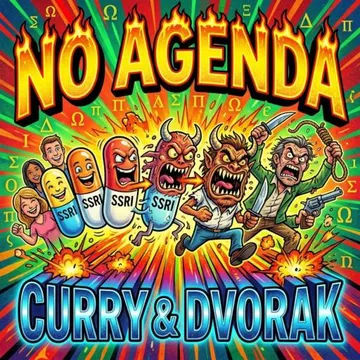
Representative Ana Paulina Luna announced upcoming House hearings regarding MKUltra and CIA influence, prompting a discussion on the role of SSRIs in modern mass shootings. Claims are made that selective serotonin reuptake inhibitors like Prozac and Paxil are linked to homicidal and suicidal ideation. The theory suggests that widespread pharmaceutical use combined with inflammatory media messaging acts as a modern iteration of mind control.

Wide Awakes
Episode 1865 23:30 - 30:32

1865: Wide Awakes

RFK Jr. Policy Promises, Pharmaceutical Advertising Bans

Robert F. Kennedy Jr. outlined a series of executive actions he intends to take, including a ban on direct-to-consumer pharmaceutical advertising on television. Kennedy also pledged to open CDC vaccine safety databases to public scrutiny on his first day in office. The discussion touches on the perceived "capture" of regulatory agencies and the potential link between drugs like Chantix and the death of Anthony Bourdain.

Taproot
Episode 1799 3:18:16 - 3:22:19

1799: Taproot

News Summary Mix, Hitler Rhetoric, Pharmaceutical Ads

A final audio montage summarizes the week's news, focusing on the pervasive use of "Hitler" and "fascist" rhetoric in political discourse. The mix also touches on reports that Trump officials may link child deaths to COVID-19 shots in upcoming CDC presentations. The show signs off with its signature "Adios Mofos" and a reminder of the value-for-value model.

Adam & The Robot
Episode 1798 1:54:58 - 1:58:56

1798: Adam & The Robot

Executive Order on Pharmaceutical Advertising Side Effects

A new executive order aims to reinstate 1997-era rules requiring pharmaceutical companies to list all side effects in television advertisements. The hosts suggest this move will result in much longer commercials, potentially benefiting cable news revenue in the short term while discouraging drug companies from advertising due to the negative impact of long side-effect lists.

Death Buses
Episode 1797 37:32 - 41:28

1797: Death Buses

RFK Jr. Media Strategy, Pharmaceutical Advertising Concerns

The hosts discuss a perceived media blackout and coordinated attack against Robert F. Kennedy Jr. by major networks like ABC. They suggest that pharmaceutical companies, which are major television advertisers, are pressuring media executives to marginalize Kennedy due to his promises to reform vaccine policy and food safety.

Dead Feathered
Episode 1795 9:50 - 12:10

1795: Dead Feathered

11 Labs Voice Isolation, Pharmaceutical Influencer Marketing

The use of 11 Labs AI technology for voice isolation and enhancement is discussed in the context of improving audio quality for political clips. This transitions into a critique of the pharmaceutical industry's shift toward using social media influencers to bypass traditional television advertising restrictions. The hosts question the legality of paid drug promotions without clear disclaimers on digital platforms.

Dead Feathered
Episode 1795 1:24:36 - 1:29:22

1795: Dead Feathered

Media Coverage of Trans Shooters, Mental Health Patterns

The hosts analyze the mainstream media's reluctance to discuss the transgender identity of recent mass shooters, contrasting it with the quick labeling of white supremacist motives in other cases. They argue that there is a pattern related to mental illness and pharmaceutical side effects that is being ignored in favor of protecting the "trans community." The segment critiques the Minneapolis mayor's plea to stop "villainizing" the community following the shooting.

chatJCD
Episode 1788 26:54 - 33:02

1788: chatJCD

Media Response to Vaccine Funding Cuts

Major news networks reported on the $500 million funding cut, highlighting that the targeted projects were led by Pfizer and Moderna. Critics question why profitable pharmaceutical giants require taxpayer subsidies for research. Dr. Celine Gounder appeared on CBS to defend mRNA technology as a vital tool for rapid pandemic response.

Op Day
Episode 1772 1:29:56 - 1:39:35

1772: Op Day

Tony Awards, Non-Binary Performances and Ads

The 78th Tony Awards featured a heavy emphasis on non-binary identities, with actor Cole Escola winning for a portrayal of Mary Todd Lincoln. The ceremony was also notable for its high volume of pharmaceutical advertisements, specifically for AIDS medications and Ozempic. Critics noted that the "rotten old binary" was a recurring theme in acceptance speeches, reflecting the current cultural shift in the Broadway community.

Queer The Deal
Episode 1768 25:02 - 28:46

1768: Queer The Deal

Insurance Coverage Implications, Affordable Care Act Vaccine Mandates

The removal of the COVID-19 vaccine from the CDC's recommended list may allow insurance companies to stop covering the cost of the shots. Under the Affordable Care Act, insurers are only required to cover vaccines on the official recommended schedule at no cost to the patient. Estimates suggest out-of-pocket costs could reach $57 for children and $137 for adults if coverage is dropped.

Queer The Deal
Episode 1768 1:01:56 - 1:06:07

1768: Queer The Deal

Gary Brekka Podcast, Pharmaceutical Advertising Regulations

In an interview on Gary Brekka's podcast, Robert F. Kennedy Jr. discussed the legal challenges of banning direct-to-consumer pharmaceutical advertising due to First Amendment protections. He argued that taxpayers effectively subsidize these ads because the government pays for the resulting drug prescriptions through federal agencies. The segment highlights the extensive side effects listed in drug commercials, such as those for the bone drug Evenity.

Pro-Mortalist
Episode 1765 13:36 - 16:42

1765: Pro-Mortalist

Gen Z Mental Health, SSRI Pharmaceutical Influence

A discussion ensues regarding the mental state of Generation Z and the potential role of prescribed antidepressants and SSRIs in fueling nihilistic violence. Claims are made that pharmaceutical companies influence mainstream media to suppress reporting on the side effects of clinical drugs. The hosts argue that the lack of a "Christian nationalist" motive in the Palm Springs bombing will lead to the story being dropped by major news outlets.

Rage Quit
Episode 1764 2:07:08 - 2:10:30

1764: Rage Quit

RFK Jr. Congressional Testimony on Chinese Pharmaceutical Dominance

HHS Secretary Robert F. Kennedy Jr. testified before Congress regarding the threat of over-reliance on Chinese pharmaceuticals. Kennedy highlighted the "Thousand Talents Program" as a vehicle for IP theft and claimed the NIH has funded Chinese military scientists performing bioweapons research. He noted that Eli Lilly is currently building nine new factories in the U.S. to secure the domestic supply chain.

Gynocracy
Episode 1749 1:20:34 - 1:23:15

1749: Gynocracy

Pharmaceutical Advertising and Media Influence

The potential for a federal ban on pharmaceutical advertising is discussed as a means to reduce industry influence over news media. Robert F. Kennedy Jr. has previously promised to address the release of clinical data and the perceived corruption of medical journals through RICO investigations.

Hypophora
Episode 1739 1:55:16 - 1:58:38

1739: Hypophora

RFK Jr. Swearing-In, Medical Board Investigations

Robert F. Kennedy Jr. delivered an acceptance speech following his swearing-in, promising to challenge the "orthodoxy" of the medical establishment. Kennedy announced plans for the Justice Department to investigate collusion between the pharmaceutical industry and medical boards that de-license dissenting physicians. He also threatened criminal and civil RICO actions against medical journals that refuse to publish studies challenging commercial interests.

The Blurt
Episode 1736 1:58:38 - 2:04:07

1736: The Blurt

2025 Grammy Awards Review, Pharmaceutical Advertising, Trevor Noah

The 2025 Grammy Awards saw a 10% decline in ratings and featured Trevor Noah as host, whose performance was described as "cringy." The broadcast was notable for a high volume of pharmaceutical advertisements for drugs with complex names and severe side effects, including death. Will Smith made a comeback appearance, and the show was noted for having more religious references than in previous years.

MEGA
Episode 1734 30:18 - 34:47

1734: MEGA

Elizabeth Warren, Vaccine Injury Compensation, Ethical Guidelines

Senator Elizabeth Warren pressed Robert F. Kennedy Jr. to commit to a four-year ban on accepting compensation from the healthcare industry after leaving government service. She further alleged that as HHS Secretary, Kennedy could manipulate vaccine labeling and injury compensation rules to benefit his past legal career. Warren's aggressive questioning is characterized as a projection of her own political interests.

Boomer Mode
Episode 1724 1:06:31 - 1:10:54

1724: Boomer Mode

Scott Gottlieb and Pharmaceutical Advertising Defense

Former FDA Commissioner and current Pfizer board member Scott Gottlieb defended direct-to-consumer pharmaceutical advertising on CNBC. Gottlieb argued that TV ads drive "help-seeking behavior" and lead to more diagnoses. The hosts criticize the "wishy-washy" questioning by Andrew Ross Sorkin regarding the ethics of drug commercials.

On The Fritz
Episode 1718 1:13:46 - 1:16:54

1718: On The Fritz

Mental Health Crisis Among Liberal Youth and Social Media

Social psychologist Jonathan Haidt's research indicates a sharp decline in the mental health of liberal youth, particularly girls, coinciding with the rise of social media. This trend is being linked to "brain rot" and the internalization of victimhood narratives. Some theorists suggest these outcomes may be the result of large-scale DARPA-style behavioral experiments or pharmaceutical industry efforts to expand the market for mental health treatments.