Topic: Straits Of Hormuz

73 chapters across the catalog

Kennel Index
Episode 1874 24:58 - 28:55

1874: Kennel Index

Operation Epic Fury, Iranian Blockade, and DC Beautification

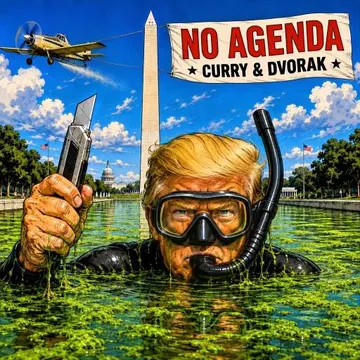
President Trump announces the success of "Operation Epic Fury" and "Operation Midnight Hammer," claiming the destruction of Iran's conventional Navy and significant degradation of its drone and missile capabilities. A naval blockade in the Strait of Hormuz is reportedly holding strong. Simultaneously, Trump highlights domestic beautification projects, including the renovation of Lafayette Park and the Lincoln reflecting pool using "American Flag Blue" coating.

Supercycle
Episode 1873 1:39:38 - 1:43:44

1873: Supercycle

Oil Price Decline, Strait of Hormuz, and Turkey Pipelines

Global oil prices saw a steep decline as markets anticipated a resumption of traffic through the Strait of Hormuz. Chevron CEO Mike Wirth discussed infrastructure investments, such as pipelines in the UAE and Saudi Arabia, designed to bypass the strait. Turkey is also positioning itself as a northern route for Iraqi and Kuwaiti oil to reach the Mediterranean, reducing the strategic importance of the Persian Gulf chokepoint.

Lunar Economy
Episode 1872 4:33 - 8:13

1872: Lunar Economy

Scott Besant on Iran, New Trump Savings App

Treasury Secretary Scott Besant discusses Iran's nuclear enrichment and the necessity of free navigation in the Strait of Hormuz. He also introduces a new mobile app for "Trump accounts," an IRA-style savings vehicle for children born between 2025 and 2028. The program includes a $1,000 federal donation, though the hosts remain skeptical of Besant's presentation style despite his policy expertise.

Lunar Economy
Episode 1872 47:46 - 49:33

1872: Lunar Economy

Oman Threat Controversy, Strait of Hormuz

Media outlets, including CNN's Anderson Cooper, report on Donald Trump's comment about "blowing up" Oman if they do not cooperate regarding the Strait of Hormuz. While Oman is a U.S. ally, Trump emphasizes that the strait must remain open as international waters. The State Department later posted the clip, suggesting the statement was an intentional diplomatic signal rather than a slip of the tongue.

Hatman
Episode 1871 4:51 - 14:11

1871: Hatman

Donald Trump, Iran Peace Deal, BBC Analysis

Donald Trump announced on Truth Social that a peace deal with Iran has been largely negotiated, though Iranian state media and the BBC express skepticism. Secretary of State Marco Rubio suggests progress is being made regarding uranium enrichment and the reopening of the Strait of Hormuz. The hosts analyze the conflicting reports and the lack of concrete evidence regarding a formal ceasefire or blockade lifting.

Hatman
Episode 1871 19:00 - 25:49

1871: Hatman

Financial War, Shipping Insurance, Strait of Hormuz Tolls

The conflict in the Persian Gulf is characterized as a financial war involving maritime insurance and shipping blockades. While the U.S. claims CENTCOM is enforcing a blockade to prevent commerce, Iran is reportedly attempting to implement a tolling system for vessels entering the Strait of Hormuz. Thousands of sailors remain trapped on commercial vessels due to the ongoing stalemate and lack of insurance coverage.

Trollery
Episode 1869 16:01 - 23:02

1869: Trollery

Donald Trump, Glenn Greenwald, Megyn Kelly on Iran Policy

Donald Trump appeared on Megyn Kelly's program alongside Glenn Greenwald to discuss Middle East strategy and the potential for war with Iran. Trump explicitly stated that military and diplomatic actions in the region are intended to assist Israel, Saudi Arabia, Qatar, and the UAE. Greenwald criticized this "America First" departure, characterizing Trump's relationship with Gulf dictators as ostentatious and financially motivated. The discussion highlights the strategic importance of the Strait of Hormuz for global oil markets and China's interests.

Trollery
Episode 1869 38:43 - 43:51

1869: Trollery

US Energy Exports, Secretary Chris Wright, Strait of Hormuz

Secretary of Energy Chris Wright outlined a strategy to bypass the Strait of Hormuz by increasing pipeline capacity through Saudi Arabia, the UAE, and Jordan. The United States is positioning itself as a net energy supplier, with plans to send American oil from Texas, Louisiana, and Alaska to China via Chinese tankers. This shift aims to reduce the strategic leverage of Iran. The discussion also touches on the "ARC" model (America, Russia, China) for global energy distribution and the potential for a back-channel agreement with Iranian leadership.

Wide Awakes
Episode 1865 1:14:42 - 1:18:27

1865: Wide Awakes

Donald Trump, Iran Negotiations and Cuba Comments

President Trump discussed the possibility of a deal to reopen the Strait of Hormuz while leaving the door open for further military strikes. Despite polling showing he is "underwater" on his handling of the conflict, Trump characterized the Iranian leadership as disjointed and weak. In a characteristic aside, he joked about "taking over" Cuba on the way back from the Iranian theater.

Pointcast
Episode 1864 56:36 - 1:01:48

1864: Pointcast

Iran Blockade, Oil Prices, November Midterms

President Trump has ordered an extended blockade of Iran in an attempt to reopen the Strait of Hormuz, causing global oil prices to rise significantly. There is speculation that the administration may attempt to lower gas prices sharply just before the November midterms to influence voter sentiment.

Cone of Uncertainty
Episode 1861 9:51 - 17:13

1861: Cone of Uncertainty

Iran Strait of Hormuz Shipping Disruptions and Tolls

The Iranian Revolutionary Guard Corps (IRGC) has reportedly reimposed restrictions on ship traffic through the Strait of Hormuz, affecting commercial vessels. Reports indicate that Indian-flagged tankers were ordered to turn around despite carrying Iranian oil, suggesting a possible extortion scheme involving transit tolls. The U.S. maintains a red line regarding freedom of movement in the waterway.

Cone of Uncertainty
Episode 1861 21:48 - 25:11

1861: Cone of Uncertainty

U.S. Navy Demining Operations and Untested Underwater Drones

The U.S. Navy is preparing to deploy untested underwater drones to clear potential mines in the Strait of Hormuz. Skepticism is raised regarding the timeline for these operations, which has shifted from three weeks to several months. The hosts suggest the delay may be a marketing tactic for new military hardware and private contractors.

micro-dosing
Episode 1860 11:20 - 12:51

1860: micro-dosing

US Reinsurance Program for Strait of Hormuz Shipping

The U.S. government has expanded its reinsurance program to $40 billion through the Development Finance Corporation (DFC) to support tankers sailing through the Strait of Hormuz. This program aims to normalize insurance rates that skyrocketed at Lloyds of London due to the conflict. Officials state the U.S. government intends to make a profit on these insurance premiums while encouraging continued maritime trade.

micro-dosing
Episode 1860 14:18 - 16:12

1860: micro-dosing

China Criticizes US Blockade of Iranian Ports

Chinese Foreign Ministry spokesman Guo Jiakun labeled the U.S. blockade of Iranian ports as dangerous and irresponsible. China argues that the action undermines ceasefire agreements and exacerbates regional tensions. The Chinese government is calling for a comprehensive end to hostilities to restore normal navigation in the Strait of Hormuz.

Splashdown
Episode 1859 45:56 - 49:51

1859: Splashdown

Margaret Brennan and Mike Turner Debate Trump's Iran Strategy

On CBS's "Face the Nation," host Margaret Brennan challenged House Intelligence Committee Chairman Mike Turner over President Trump's fluctuating strategy regarding the Strait of Hormuz. Turner defended the administration, arguing that the strategy must remain fluid to counter Iranian maneuvers. The discussion also addressed why American gasoline prices remain high despite domestic oil production, attributing the cost to international market pricing and corporate profit-seeking.

Splashdown
Episode 1859 55:20 - 59:38

1859: Splashdown

NPR Analyzes J.D. Vance's Lack of International Diplomatic Experience

NPR's Daniel Kurtzleben reported on Vice President J.D. Vance's challenging role in brokering peace with Iran despite having only two years of Senate experience prior to taking office. The report highlighted the "classic vice presidential trap" set by Trump, who stated he would blame Vance if the negotiations failed. Key obstacles in the talks include disagreements over enriched uranium and Trump's unconventional suggestion that the U.S. and Iran should jointly charge fees for ships passing through the Strait of Hormuz.

Splashdown
Episode 1859 1:10:09 - 1:11:51

1859: Splashdown

Trump Proposes Joint Venture for Strait of Hormuz Tolls

In response to Iran's demand for permanent control and tolling rights over the Strait of Hormuz, President Trump has proposed a "joint venture" where the U.S. and Iran would share the revenue from shipping fees. Trump justified the proposal by claiming the U.S. is the victor in the conflict and should therefore benefit from the transit of tankers. Meanwhile, Israel continues military strikes in Lebanon to prevent a Hezbollah-led coup.

Splashdown
Episode 1859 1:23:29 - 1:25:16

1859: Splashdown

Tucker Carlson on the Decline of the American Empire

Tucker Carlson declared that the current conflict in Iran signifies the end of the American Empire as it has existed for the last 80 years. Carlson argued that the U.S. has reached the limits of its power, specifically citing the inability to keep the Strait of Hormuz open. He predicted a "very rough time" for the American economy but suggested that the end of global interventionism might eventually benefit the nation long-term.

Nut Spread
Episode 1858 2:50 - 13:06

1858: Nut Spread

Donald Trump, Iran Ceasefire Negotiations, Media Coverage

President Donald Trump announced a two-week suspension of planned attacks on Iran contingent on the immediate opening of the Strait of Hormuz. Major news networks ABC, NBC, and CBS reported on the "double-sided ceasefire" following Trump's social media threats that an entire civilization might die. The reports highlight internal Republican divisions, with some senators supporting the pressure while others, including Ron Johnson, expressed concern over targeting civilian infrastructure.

Nut Spread
Episode 1858 25:45 - 30:08

1858: Nut Spread

Strait of Hormuz, Israel Involvement, Oil Prices

CNN and other outlets report conflicting details regarding the Iran ceasefire, specifically whether Israel is a party to the agreement. While Vice President J.D. Vance suggested Israel might "check themselves" in Lebanon to support U.S. negotiations, Prime Minister Benjamin Netanyahu maintained that Israel's finger remains on the trigger. Discrepancies remain regarding whether the Strait of Hormuz is truly open to oil tanker traffic and the specific points of the 10-point Iranian proposal.