Topic: Emergency Communication

10 chapters across the catalog

The Fog
Episode 1726 9:23 - 11:28

1726: The Fog

Ten Days of Darkness, Starlink Internet, Communication Blackout

A conspiracy theory warns of an imminent ten-day global communication blackout where the internet will transition exclusively to the Starlink satellite network. Citizens are urged to stockpile a month's supply of food, water, and cash as banks and ATMs are expected to fail. The theory claims the military will eventually provide supplies and broadcast "education" on freedom.
Smokin' Hot
Episode 1242 1:44:00 - 1:50:34

1242: Smokin' Hot

Ham Radio as the Network of Last Resort

The hosts, both licensed ham radio operators, discuss the importance of the amateur radio network during global crises. They joke about their different license levels and the lack of actual radio activity during the pandemic. Ham radio is framed as the "public service network of last resort" for when traditional infrastructure fails.

Work To Rules
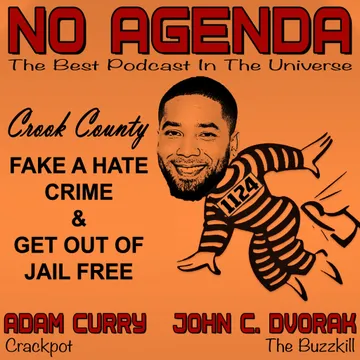
Episode 1124 2:38:57 - 2:43:52

1124: Work To Rules

Rockland County Measles Emergency and Mandatory Vaccination

Rockland County, New York, declared a state of emergency due to a measles outbreak, barring unvaccinated children from public places for 30 days. The outbreak is concentrated in the Orthodox Jewish community. The hosts express concern over the mandatory nature of the order and the pharmaceutical industry's role in driving vaccine demand.

End of an Era
Episode 1038 1:51:36 - 1:54:41

1038: End of an Era

Ham Radio and North Korean Number Stations

The hosts, both licensed amateur radio operators, discuss the role of "hams" as a public service network of last resort during disasters. They play a clip from a North Korean number station known as "The Parrot," which broadcasts coded messages over shortwave radio. The segment explains the technical background of number stations and the hosts' own history with radio licensing and emergency preparedness.

Laptop Bomb
Episode 797 22:29 - 24:05

797: Laptop Bomb

Ham Radio Vanity Call Signs, Bruce Perrins Speech

A host obtained a new FCC vanity call sign, Kilo 5 Alpha Charlie Charlie (K5ACC). The discussion references a speech by digital radio pioneer Bruce Perrins regarding the role of amateur radio as a public service network of last resort. The segment highlights the community's self-perception as essential responders during a potential apocalypse.

Moral Debt
Episode 722 1:37:13 - 1:38:42

722: Moral Debt

Amateur Radio Public Service Announcement Recording

A host shares a self-recorded public service announcement for the Ski Country Amateur Radio Club's upcoming "Field Day" on June 27th. The spot encourages the community to visit Missouri Heights to learn about alternative power and emergency communications. The segment serves as a demonstration of professional voiceover work compared to the previously discussed commercial.

Episode 516 2:02:23 - 2:05:40

516: 9/11 Generation

PSKmail, High-Frequency Radio Social Network

Adam Curry discusses his transition to PSKmail, a social network that operates via high-frequency ham radio rather than relying solely on the internet. Using Phase Shift Keying (PSK), the system allows for decentralized communication that can remain functional if the traditional internet fails. The network is Unix-based and supports features like APRS messaging and even tweeting via radio servers.

Episode 457 38:07 - 44:10

457: Giblet in EUROLand

Ham Radio Networking and Emergency Preparedness

A new emergency communication network is being established using ham radio frequencies and Echo Link node 775753. The project aims to create a daisy chain of RF repeaters to ensure communication remains possible if traditional cell towers and internet infrastructure fail. Listeners are encouraged to obtain their amateur radio licenses to participate in this decentralized broadcast system.

Stop Albedo Now!
Episode 248 3:20 - 8:10

248: Stop Albedo Now!

Ham Radio Licensing, Emergency Communication Strategies

John C. Dvorak announces his intention to obtain a ham radio license, noting that Morse code is no longer a requirement for the test. The discussion encourages listeners to revitalize the amateur radio business as a backup communication method for when cell towers and the internet fail. Dvorak shares an anecdote about acquiring a 50-foot submarine antenna from a shipyard in Richmond.