Topic: Supreme Court

445 chapters across the catalog

Flock Off!
Episode 1890 27:42 - 34:22

1890: Flock Off!

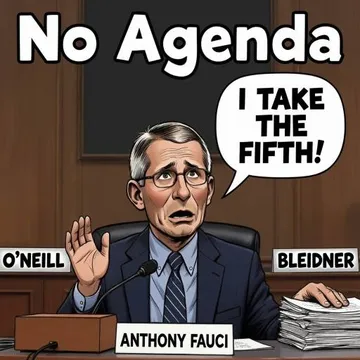
Legal Immunity and Perjury Traps in Senate Testimony

Legal experts and senators debate the validity of Anthony Fauci invoking the Fifth Amendment given his reported presidential pardon. Senator Josh Hawley and others argue that under the 1896 Supreme Court case Brown v. Walker, a pardoned individual cannot claim privilege against self-incrimination because they face no criminal jeopardy. The discussion explores whether Fauci's refusal to answer constitutes contempt of Congress.

Buy the Crash
Episode 1882 5:29 - 11:02

1882: Buy the Crash

Supreme Court, Trump Executive Order on Birthright Citizenship

The Supreme Court of the United States issued a ruling rejecting President Donald Trump's executive order aimed at ending birthright citizenship. Chief Justice John Roberts wrote the majority opinion upholding the 14th Amendment's guarantee of citizenship to those born on U.S. soil. Justices Clarence Thomas, Neil Gorsuch, and Samuel Alito dissented, with Alito calling the decision a serious mistake.

Buy the Crash
Episode 1882 11:03 - 13:23

1882: Buy the Crash

LULAC Response, Stateless Children Concerns

Juan Pranio, CEO of LULAC, praised the Supreme Court decision protecting birthright citizenship. He argued that the ruling prevents hundreds of thousands of children born to undocumented parents from becoming stateless. Media reports highlighted that approximately 250,000 babies are born annually in the U.S. to non-citizens.

Cow Cartel
Episode 1881 1:51:53 - 1:56:25

1881: Cow Cartel

Supreme Court TPS Ruling, Haiti and Springfield Pets

The Supreme Court issued a 6-3 ruling affirming the president's authority to keep Temporary Protected Status (TPS) truly temporary. Former ICE Director Tom Homan argues that TPS has historically been used to bypass immigration laws permanently. The discussion touches on the misappropriation of aid in Haiti by the Clinton Foundation and concludes with Donald Trump's viral debate claim regarding immigrants in Springfield, Ohio, allegedly "eating the dogs."

Screwball
Episode 1876 22:14 - 27:08

1876: Screwball

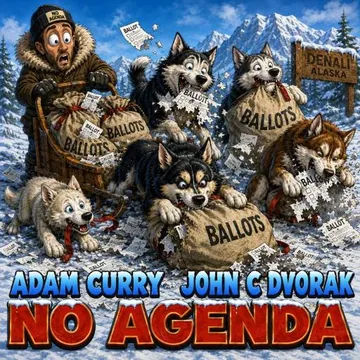
Alaska Mail-in Ballot Challenges and Dog Sled Logistics

NPR reports on the potential disenfranchisement of rural Alaskan and Native voters if the Supreme Court strikes down laws allowing late-arriving mail-in ballots. The report highlights the extreme logistics of voting in remote villages, which rely on dog sleds, snow machines, and bush planes to transport ballots across vast distances.

Sonic Thump
Episode 1875 20:43 - 23:00

1875: Sonic Thump

Supreme Court Case Watson v. RNC on Mail-in Ballots

The Supreme Court is considering Watson v. Republican National Committee, a case that could end the practice of accepting ballots that arrive after election day even if postmarked on time. While any ruling is unlikely to be retroactive for past California elections, it could significantly alter the rules for the upcoming November general election.

Trollery
Episode 1869 1:09:58 - 1:13:52

1869: Trollery

Supreme Court Broker Liability Ruling, Trucking Safety

The Supreme Court ruled unanimously that logistics brokers like C.H. Robinson can be held liable for negligence when hiring unsafe motor carriers. The case stemmed from a fatal 2022 crash involving a driver with a stolen registration and drugs in his system. This ruling ends the practice of brokers "turning a blind eye" to the safety records of the independent contractors they hire to haul goods for major retailers like Walmart.

Pointcast
Episode 1864 2:06:09 - 2:10:46

1864: Pointcast

Supreme Court, Louisiana Redistricting, Voting Rights Act

The Supreme Court ruled 6-3 that Louisiana cannot use race-based redistricting to comply with Section 2 of the Voting Rights Act. The decision struck down a map that created a majority-black district, with the majority opinion stating that race-based gerrymandering remains unconstitutional regardless of the intended beneficiary.

Nekkidly
Episode 1863 14:34 - 16:46

1863: Nekkidly

Margaret Brennan, Gun Violence Monologue

CBS News anchor Margaret Brennan linked the shooting to the Second Amendment and a broader culture of political hate. She cited US Marshals' reports of 15,000 threats against lawmakers and noted that some cabinet members now live on military bases for protection. Critics argued her monologue conflated general threats with specific gun violence issues.

Rackout
Episode 1854 1:25:54 - 1:28:29

1854: Rackout

Supreme Court, Mississippi Mail-In Ballot Oral Arguments

The U.S. Supreme Court heard oral arguments regarding a Mississippi law that allows mail-in ballots to be counted up to five days after Election Day if postmarked on time. The Republican National Committee argues that federal law mandates a single "Election Day," making late-arriving ballots invalid. A ruling in favor of the RNC could force changes in 18 other states with similar grace periods for ballot processing.

Podcaster Down!
Episode 1848 1:09:06 - 1:10:58

1848: Podcaster Down!

Alabama Nitrogen Gas Execution, Death Penalty Hypocrisy

Alabama's plan to execute a prisoner using nitrogen gas—a method never before used in the US—sparks a debate on capital punishment. The discussion highlights the political divide between views on abortion and the death penalty, noting the contradictions in both Republican and Democrat platforms.

Slave Slab
Episode 1845 1:29:29 - 1:35:07

1845: Slave Slab

Supreme Court Tariff Ruling, Jameson Greer, Globalist Interests

U.S. Trade Representative Jameson Greer discusses the Supreme Court's 6-3 ruling that struck down certain presidential tariffs. President Trump criticized the court, alleging they were swayed by foreign interests and "unpatriotic" globalist groups like the Cato Institute. The ruling forces the administration to find alternative legal authorities, such as Section 122, to maintain its trade policy against foreign importers.

Slave Slab
Episode 1845 1:35:07 - 1:38:53

1845: Slave Slab

Section 122 Tariffs, Supreme Court, Performative Legal Rulings

Following the Supreme Court's ruling against his emergency tariffs, President Trump invoked Section 122 to set a new 15% global tariff based on trade imbalances. Legal experts describe the Supreme Court's decision as "performative," as the president retains multiple other statutory authorities to restrict trade. The new tariffs are limited to 150 days unless extended by Congress, but can be repeatedly re-invoked.

Commie Comey
Episode 1071 50:59 - 53:26

1071: Commie Comey

Democratic Delay Strategy, Judge Amy Coney Barrett

MSNBC analysts suggest the Democratic strategy is to delay the Kavanaugh nomination until after the midterms, hoping to win the Senate and block any Trump appointee for two years. Senator Mazie Hirono is cited as a proponent of this approach. The hosts discuss Judge Amy Coney Barrett as a potential alternative nominee who might further energize the Republican base.

Battle Rhythm
Episode 1824 1:24:22 - 1:26:42

1824: Battle Rhythm

Unitary Executive Theory, FTC Personnel Firing

President Trump fired a member of the Federal Trade Commission (FTC) whose term was not yet expired, reportedly to trigger a Supreme Court case regarding the "unitary executive theory." This legal theory posits that the president should have absolute control over all executive branch agencies, potentially allowing for the removal of independent agency heads and civil service employees without cause.

NA Era
Episode 1811 1:59:37 - 2:08:01

1811: NA Era

Canada Tariff Ad, Ronald Reagan Quote and IEEPA Powers

The Canadian government releases a $75 million advertisement featuring a Ronald Reagan quote to argue against tariffs, which the Trump administration labels as fraudulent. The dispute centers on the International Emergency Economic Powers Act (IEEPA), which allows the President to unilaterally impose tariffs during national emergencies. The Supreme Court is set to hear arguments on whether this authority bypasses Congressional power over trade.

Gray Zone
Episode 1806 2:29:37 - 2:35:20

1806: Gray Zone

Supreme Court Conversion Therapy Case, Colorado Legal Battle

The U.S. Supreme Court is hearing arguments regarding Colorado's ban on conversion therapy for minors. The case pits the Alliance Defending Freedom, representing a licensed therapist, against the state's Attorney General. The debate centers on whether the ban violates a therapist's right to free speech and whether the practice meets established medical standards of care.

Dead Feathered
Episode 1795 1:06:32 - 1:12:13

1795: Dead Feathered

Trump Tariffs, Supreme Court Legal Battle

A Federal Appeals Court ruled many of President Trump's tariffs illegal, but delayed implementation until October to allow for a Supreme Court appeal. Legal experts suggest the Supreme Court may "slow walk" the decision until after the 2026 midterm elections. The hosts argue that the tariffs are a deliberate negotiating strategy rather than a lack of one, despite media framing them as a simple tax on consumers.

Florida Ounce
Episode 1790 23:21 - 27:06

1790: Florida Ounce

Texas Attorney General Ken Paxton Files Quo Warranto Against Democrats

Texas Attorney General Ken Paxton filed a quo warranto petition in the Texas Supreme Court to compel Democratic lawmakers to return to work. The legal maneuver could allow Governor Greg Abbott to declare seats vacant and appoint replacements if the lawmakers do not return within 48 hours. Paxton is also seeking to jail Beto O'Rourke for allegedly violating a court order regarding fundraising for the fleeing Democrats.