
Topic: Hurricane Reporting

8 chapters across the catalog

Si Senor
Episode 1487 2:56:57 - 3:02:30

1487: Si Senor

Typhoon Nanmadol and Puerto Rico Hurricane Comparison

Japan's Meteorological Agency issued a level 5 emergency warning for Typhoon Nanmadol, which is packing winds up to 170 mph. The segment compares the massive scale of the Japanese typhoon to the media coverage of Hurricane Fiona in Puerto Rico, which has significantly lower wind speeds.

Bug Ramen
Episode 1037 1:18:47 - 1:22:22

1037: Bug Ramen

Subtropical Storm Alberto, Weather Media Sensationalism

Media coverage of Subtropical Storm Alberto is criticized for treating the event with the same intensity as a major hurricane. Governors in Florida and Mississippi declared states of emergency as the storm approached the Gulf Coast. The hosts suggest that naming minor subtropical systems helps "pad the stats" for climate change narratives and fills time during slow news cycles.

Service Pony
Episode 962 17:36 - 19:14

962: Service Pony

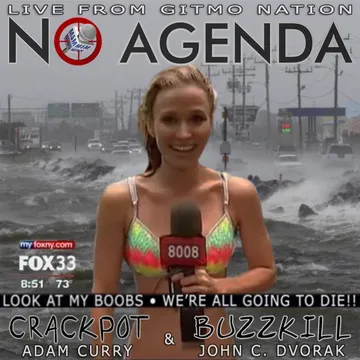
Media Storm Reporting Trends, Female Reporters in High Winds

A trend is noted in broadcast journalism where female reporters are increasingly sent into the center of storms to be buffeted by high winds for live shots. The hosts question the logic and safety of these reports, noting that while the public is told to "hunker down" and shelter in place, reporters remain exposed on camera. They suggest that such segments could easily be faked using green screens.

Stay Safe!
Episode 959

959: Stay Safe!

Hurricane Harvey Weather Incident and Media Hype

Hurricane Harvey's impact on Austin, Texas, involves significant rainfall and flooding, with expectations of up to 40 inches in certain areas. Observations from weather stations suggest that media classifications of the storm as a Category 4 were exaggerated compared to recorded wind speeds of 80 to 100 miles per hour. The discrepancy between official reports and local conditions highlights a tendency for news outlets to prioritize sensationalism to maintain viewership.

Stay Safe!
Episode 959 3:59 - 6:16

959: Stay Safe!

Media Sensationalism in Hurricane Harvey Field Reporting

ABC News and other networks utilized dramatic field reporting techniques during Hurricane Harvey, featuring reporters standing in high winds to emphasize the storm's intensity. These reports often incorporate political narratives, including claims that the disaster is a direct result of the climate crisis or a test of the president's preparedness. Such coverage is characterized as performative, focusing on "feeling" the storm rather than providing objective data.

Wordy Durd
Episode 867 1:10:57 - 1:14:32

867: Wordy Durd

Shep Smith's Hurricane Hype, Fort Lauderdale Reality

Fox News anchor Shep Smith is called out for extreme fearmongering during Hurricane Matthew, telling viewers that they and their children would die if they didn't evacuate. The hosts contrast this with reports from Fort Lauderdale, where the actual impact was far less severe than predicted, suggesting the storm's path and intensity were exaggerated.

Episode 457 26:08 - 27:48

457: Giblet in EUROLand

Media Sensationalism of Snowshoe West Virginia Blizzard

News outlets attempted to link Hurricane Sandy to a "freak" blizzard in Snowshoe, West Virginia, to bolster the global warming narrative. Critics noted the irony of reporting on heavy snow at a location that is a known ski resort. The reporter's dramatic presentation of the snow's weight was characterized as an attempt to manufacture a crisis out of a routine seasonal event.

Episode 456 51:49 - 56:27

456: Sell-ah-bretties

Talkers Magazine Recognition, Fake Weather Reporting

The No Agenda show is recognized in Talkers Magazine's "Frontier 50" list of influential internet talkers. The hosts also discuss instances of fraudulent weather reporting, where news crews allegedly shake cameras to simulate high winds. They cite a specific example from Kill Devil Hills, North Carolina, where the reporter's environment appeared calm despite the dramatic presentation.